Pipelines are an essential form of transportation in the Permian Basin, From long haul transport of oil and natural gas to refineries or Gulf Coasts ports to export, pipelines safely and efficiently move products, eliminating approximately 34,000 truck trips every day.
Just within the regions, pipelines carry more products reducing even more truck trips.
Those pipelines have an enormous economic impact and create many jobs. Best of all, they help further bolster our regional economy by reducing transport costs which have negatively affected Permian oil and gas pricing in the past.
The Trans-Pecos Pipeline stretches 148 miles from the WAHA Hub to the Presidio Border where it connects to its Mexican counterpart providing service all the way to the Port of Topolobampo. The 42 inch LNG pipeline is designed to transport 1.4 billion cubic feet of natural gas daily. Currently, there are 6 taps off of the US portion of the line and 11 permitted taps in Mexico. The line went into service in the Spring of 2017.
The Wink to Webster Pipeline alone carries approximately 1.5 million barrels daily from the Permian to the Gulf Coast and reduces nearly 7,900 long haul trips daily.
The Eiger, Matterhorn, and Blackcomb Pipelines transport enough natural gas daily to power 10.5 million homes for an entire year.
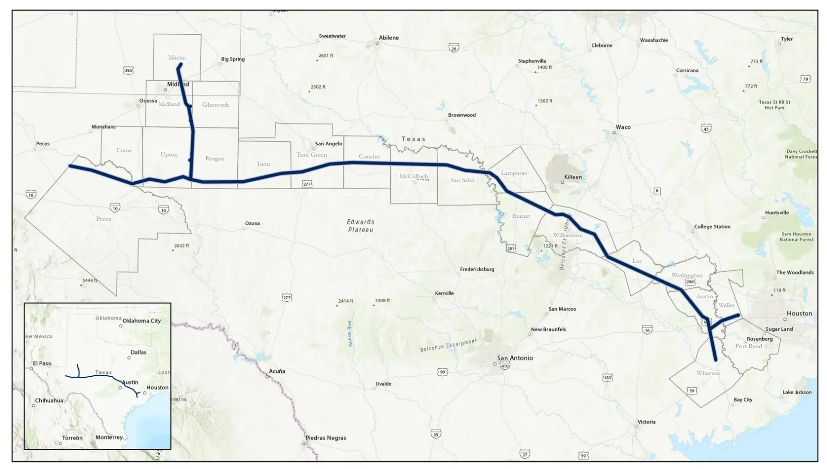
450 miles long, 42 inch diameter natural gas pipeline from Midland-Odessa to Katy. 2.5 billion cubic feet daily capacity. Slated for completion in Summer 2028.
580 miles long from Midland area to Katy, 2.5 billion cubic foot daily capacity. Operation in 2025.
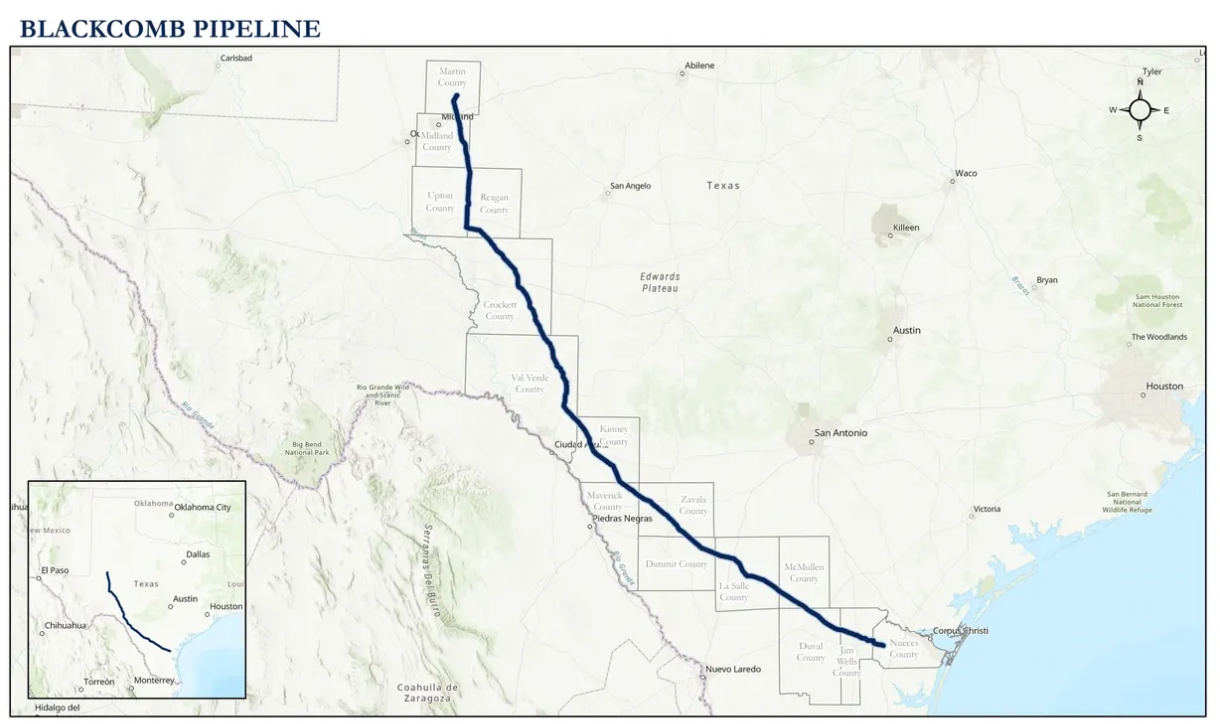
480 mile pipeline from the Permian to Agua Dulce. 2.5 billion cubic foot daily capacity. Completion expected in Fall 2026.
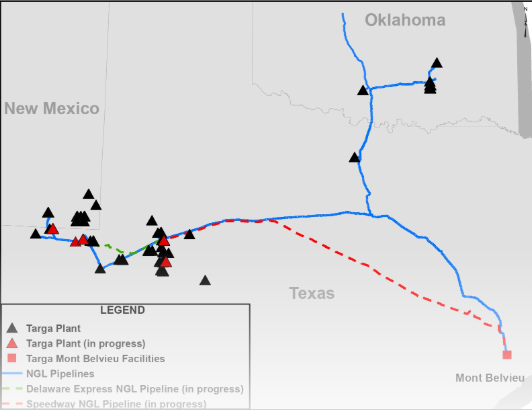
500 miles from Permian Basin to Mont Belvieu. Liquid Natural Gas capacity of 500,000 barrels a day, expandable to 1 million a day. Completion set for 2027.
42-inch 516 mile natural gas pipeline from the Permian Basin to Phoenix, Arizona, at a cost of $5.3 billion.
Adds an additional 1.5 billion cubic feet of daily increased capacity. Expected to enter service in the fourth quarter of 2029.